July 05, 2026
The moment a customer clicks "Buy," your brand promise shifts from marketing to operations. Yet for many retail and D2C leaders, this is precisely where the customers experience fractures.
Disconnected tech stacks create dangerous operational blind spots. A fragmented Order Management System (OMS) leaves supply chain managers battling inventory siloes, inefficient multi-warehouse order routing, and unexpected carrier delays. Meanwhile, customers face delivery uncertainty, leading to a surge in costly "Where Is My Order?" (WISMO) supports tickets and diminishes brand loyalty.
To lead in modern omnichannel commerce, back-end logistics and front-end customer engagement cannot operate in isolation. They must function as a single, intelligent engine.
What Is a Post-Purchase Customer Experience Platform?
A post-purchase customer experience platform is a software solution that enhances every customer interaction after an order is placed, from order confirmation to delivery, returns, and follow-up engagement. It integrates with e-commerce platforms, Order Management Systems (like TOMS), Warehouse Management Systems (like TWMS), shipping carriers, and CRM tools to create a seamless and transparent customer journey.
Key capabilities include:
- Real-time order tracking with live shipment updates
- Automated notifications via email, SMS, or messaging apps
- Branded tracking pages for consistent customer experience
- Self-service returns and exchanges to simplify reverse logistics
- Customer feedback and loyalty campaigns to encourage repeat purchases
By keeping customers informed throughout the fulfillment journey, the platform reduces "Where Is My Order?" (WISMO) inquiries, lowers support costs, and improves customer satisfaction. It also provides valuable insights into delivery performance, return trends, and customer engagement, helping businesses optimize operations while building trust, increasing retention, and driving long-term customer loyalty.
Advantages of having unified approach for Order Management with Post-Purchase Experiences
Many businesses rely on disconnected systems to manage orders, inventory, fulfillment, shipping, and customer communication. This fragmented approach creates operational inefficiencies and delivers an inconsistent post-purchase experience, ultimately impacting customer satisfaction and brand loyalty.
Without a unified approach, businesses struggle to meet growing customer expectations for transparency and speed. Integrating order management with post-purchase experience tools helps streamline operations, improve communication, reduce support costs, and create a seamless customer journey that encourages repeat purchases and long-term loyalty.
Who Needs a Post-Purchase Customer Experience Platform?
A post-purchase customer experience platform is ideal for businesses that manage high order volumes and want to deliver seamless fulfillment, proactive customer communication, and hassle-free returns. It is especially valuable for retail, e-commerce, direct-to-consumer (D2C), manufacturing, wholesale, healthcare, and third-party logistics (3PL) organizations, from fast-growing mid-sized businesses to large enterprises.
Key stakeholders include:
- eCommerce Directors seeking higher customer retention and repeat purchases
- Operations Managers focused on improving fulfillment efficiency
- Customer Experience Leaders aiming to reduce support inquiries and increase satisfaction
- Supply Chain Managers requiring end-to-end shipment visibility
Common challenges include delayed delivery updates, high "Where Is My Order?" (WISMO) inquiries, and inefficient returns. By integrating with TOMS, TWMS, and shipping carriers, a post-purchase platform delivers real-time visibility, automated customer notifications, streamlined returns, reduced support costs, and stronger customer loyalty, ultimately improving both operational efficiency and long-term business growth.
Where Is a Post-Purchase Customer Experience Platform Used?
A post-purchase customer experience platform is used by businesses that manage complex order fulfillment and want to provide a seamless experience after checkout. It is widely adopted by eCommerce retailers, direct-to-consumer (D2C) brands, B2B distributors, omnichannel retailers, online marketplaces, and third-party logistics (3PL) providers. The platform supports multiple teams by connecting fulfillment operations with customer-facing communication.
The platform streamlines critical post-purchase workflows, including order tracking, automated delivery notifications, shipment exception management, branded tracking pages, returns and exchanges, customer feedback collection, and loyalty engagement, creating transparent and consistent customer experience while improving operational efficiency.
What is Narvar?
Narvar is a leading post-purchase customer experience platform that helps retailers and eCommerce brands deliver exceptional experiences after a customer completes a purchase. The platform connects with Order Management Systems (like TOMS), Warehouse Management Systems (like TWMS), shipping carriers, and eCommerce platforms to provide real-time order tracking, proactive delivery notifications, branded tracking pages, and self-service returns. By improving visibility throughout the fulfillment journey, Narvar helps businesses reduce customer support inquiries, increase delivery transparency, and build customer trust.
Its post-purchase solutions enable organizations to enhance customer satisfaction, encourage repeat purchases, strengthen brand loyalty, and turn every delivery into an opportunity for long-term customer engagement.
How Narvar Works Alongside a Tejas Order Management System (TOMS)
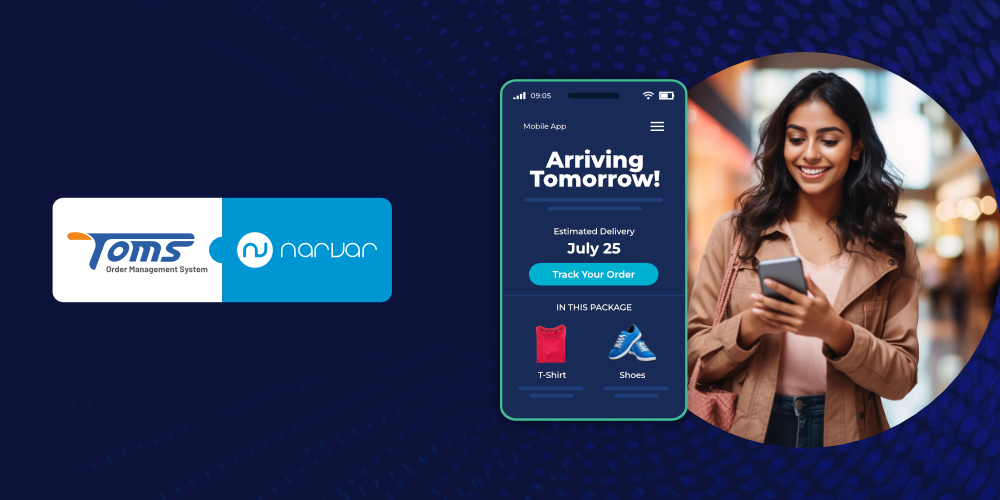
Tejas Order Management System (TOMS) and Narvar work together to deliver a seamless post-purchase experience. While the TOMS manages the operational side of the order lifecycle—including order creation, inventory allocation, fulfillment, and carrier selection—Narvar focuses on customer-facing interactions after the order is shipped. It receives order and shipment data from TOMS to provide real-time tracking, proactive delivery notifications, branded tracking pages, and self-service returns and exchanges.
Together, they support the complete post-purchase journey:
- TOMS: Creates orders, orchestrates fulfillment, and coordinates warehouse operations.
- Narvar: Delivers real-time shipment tracking and automated customer updates.
- TOMS: Manages order status, inventory, and fulfillment of workflows.
- Narvar: Simplifies returns, exchanges, and post-delivery engagement.
- Customer Support: Gains complete shipment visibility to resolve inquiries quickly.
By combining operational efficiency with superior customer experience, TOMS and Narvar reduce WISMO inquiries, improve transparency, lower support costs, and increase customer satisfaction and loyalty.
Book a demo with Tejas Software to see how we can help.
FAQ's
What Are Delivery Notifications?
Delivery notifications are automated messages sent to customers throughout the shipping process to provide updates on their order status. Delivered via email, SMS, push notifications, or messaging apps, they inform customers about shipment confirmation, transit progress, delivery schedules, delays, and successful delivery, ensuring a transparent post-purchase experience.
How do ship confirmation emails differ from delivery notifications?
Ship confirmation emails are sent immediately after an order is marked as shipped in TOMS and provide details such as the order number and shipping information. Delivery notifications are sent throughout the shipping process, providing real-time updates on shipment status, estimated delivery, delays, and final delivery confirmation.
Can small warehouses benefit from using delivery notifications?
Yes. Small warehouses can benefit significantly from delivery notifications by keeping customers informed with automated shipment updates. This reduces "Where Is My Order?" (WISMO) inquiries, lowers customer support workload, improve delivery transparency, enhance customer satisfaction, and help build trust and loyalty without requiring additional operational resources.
What types of delivery notifications improve customer experience?
The most effective delivery notifications include order shipped, in transit, out for delivery, delivery delayed, delivery rescheduled and delivered alerts. These timely updates keep customers informed, reduce uncertainty, improve transparency, minimize support inquiries, and enhance the overall post-purchase experience.